Gear page
Problem
Athletes, from cyclists and runners to skiers and swimmers, love their gear. Many of them have questions about it—how many miles do I have on this chain? Which running shoes do I do my fastest long runs in? I've seen people track this data with dedicated apps or Google Sheets, but Strava already has gear tracking. Why don't more people use it?
It's kind of tedious to track your gear on Strava. After you finish an activity with a smartwatch, you have to go back to your phone and manually change the gear you used. Also, advanced gear features are only available on the web, but most athletes exclusively use Strava on their phones.
Solution
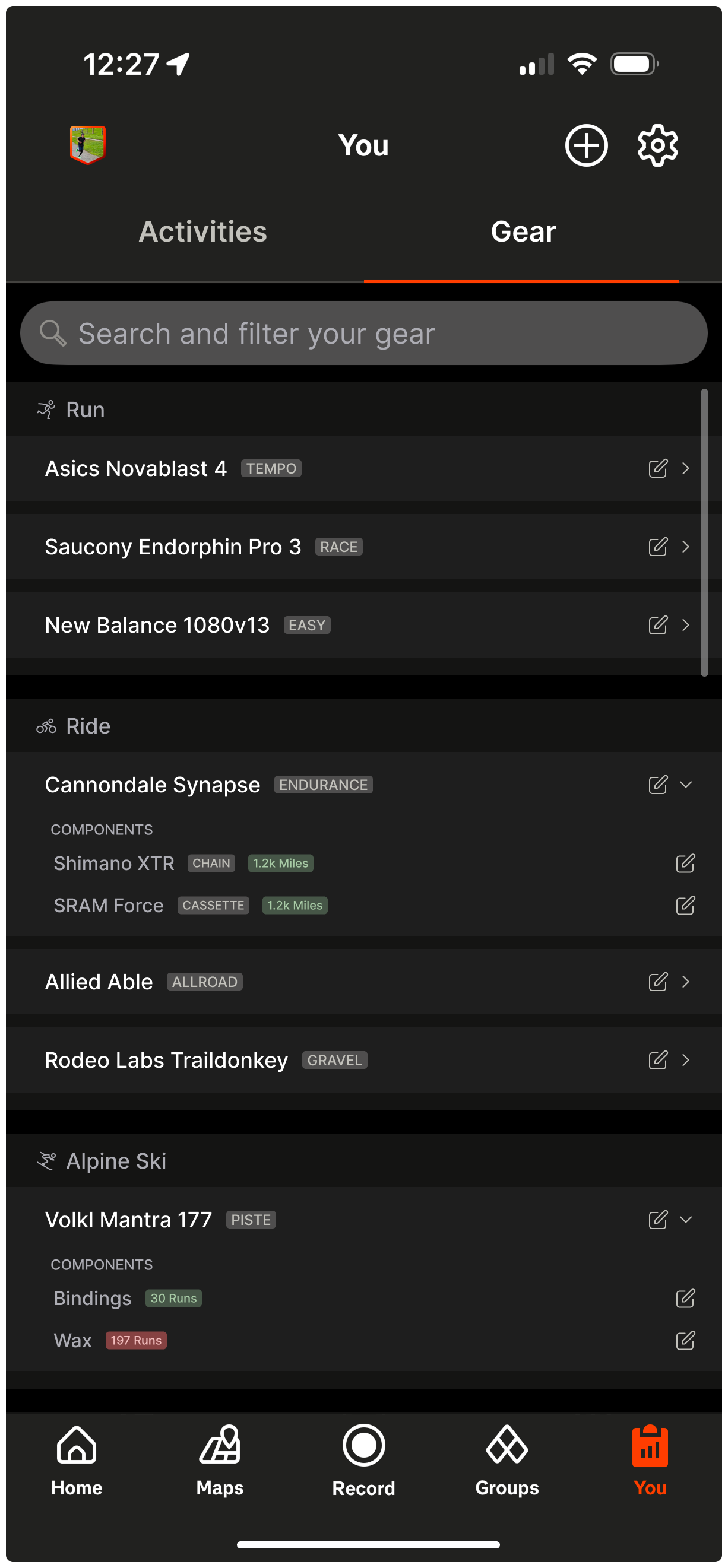
We can make gear on Strava radically better, bringing on more paying customers. First, to make it easier to access, build a dedicated page on mobile for gear management. This page should show data and allow configuration of every component on a bike, every shoe, and every type of ski in a user's stable. With better gear in Strava, users will never have to use a spreadsheet or products like ProBikeGarage to track their equipment again.
Also, use Strava AI to predict what gear a user uses in an activity. Instead of just defaulting to one shoe for runs, for example, prime our model with marketing information about shoes, and feed it pace and heart rate data, so it selects tempo shoes for a tempo run.
Better gear in Strava will bring in new Premium subscribers and increase revenue.
Race leaderboards
Problem
Strava is a social platform for athletes. For many athletes, races are the most social thing they do. But, after a race, they don't use Strava to see how they stack up against the competition. Why not?
Currently, people use hundreds of different websites to look at race results. These are either race aggregators like RunSignup or a race's own website. By letting its athletes go elsewhere for race results, Strava is leaving traffic and money on the table.
Solution
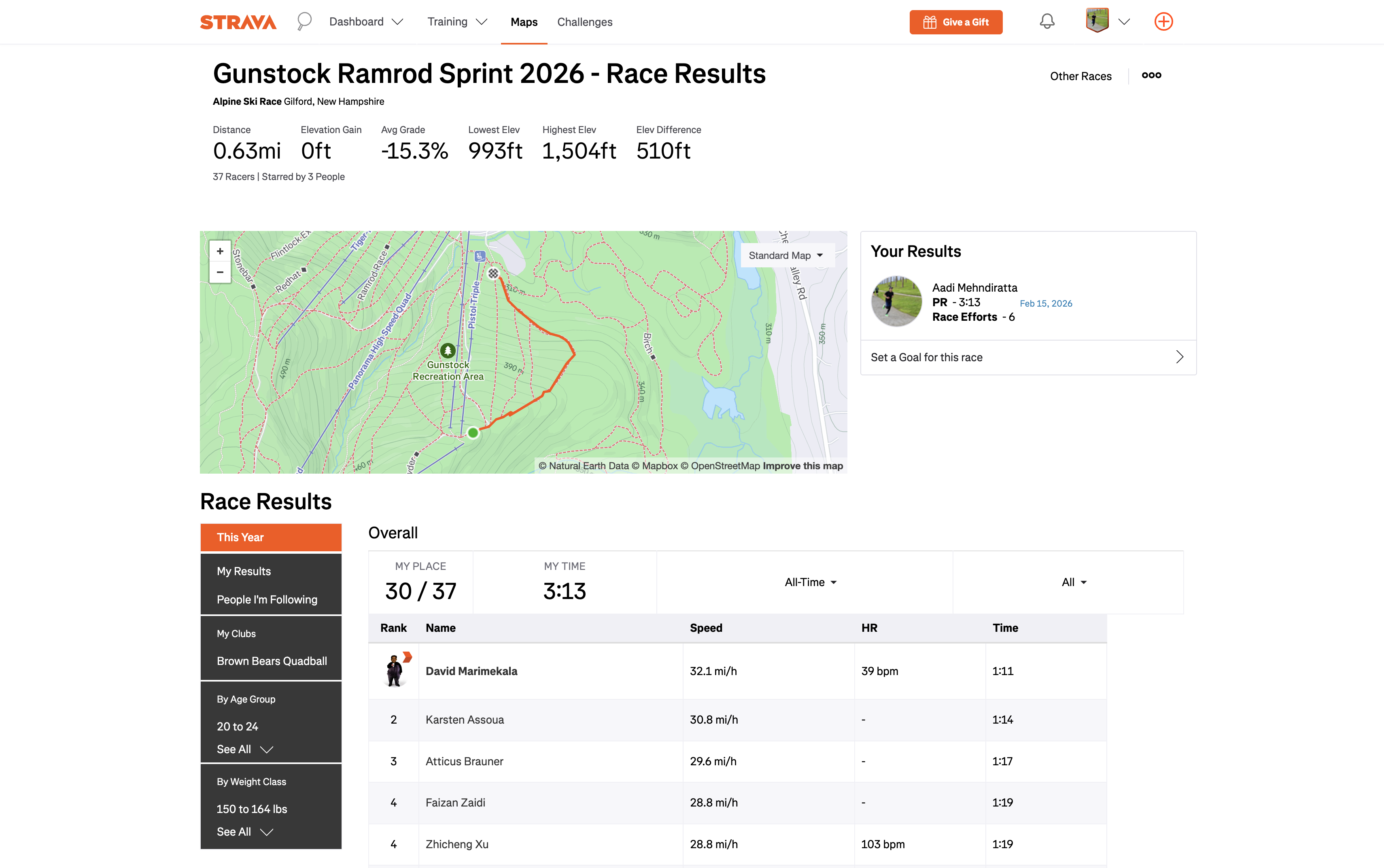
Host race results on Strava. We'll pull race information from Active, RunSignup and other aggregators, and activities that match their times, locations and distances will be pooled into leaderboards—just like we already do for runs with friends. This leaderboard won't be perfect (it won't have chip times, at least initially) but it will be the first place many athletes turn after they finish a race.
If we make race leaderboards a Premium feature, it'll increase subscriber count and revenue.
B2B trail map
Problem
Google + Apple Maps have almost complete maps of paved roads, but they're missing most unpaved roads and trails. Other mapping companies, like Mapbox or Alltrails, can't or won't fill in the gaps. As a result, most people who use mapping apps are out of luck if they want to go anywhere unpaved.
Solution
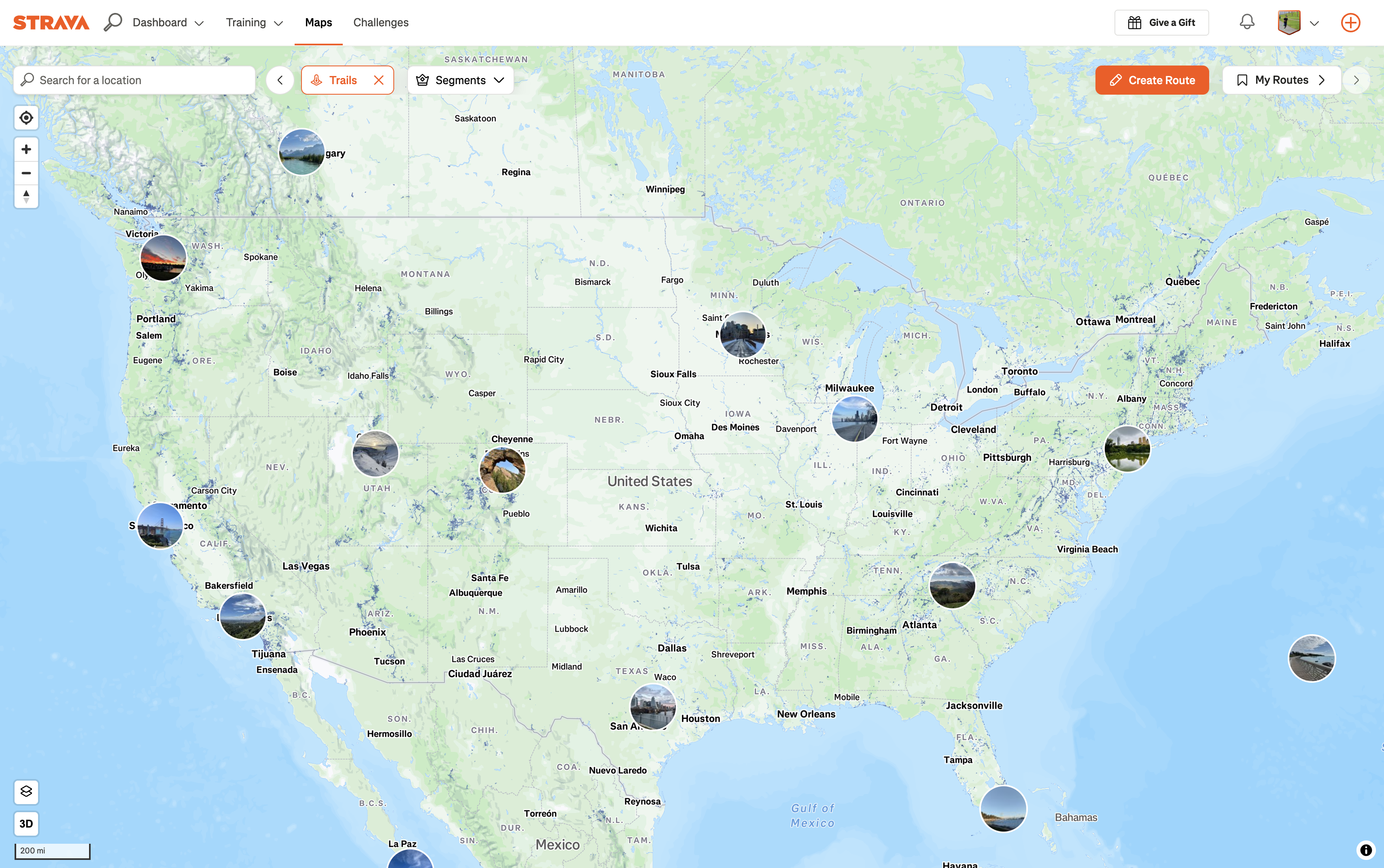
Strava's sitting on a gold mine. You have the largest database of activity data ever. This can be pretty easily transformed into a data-rich, live, global map of trails that can then be licensed to mapping apps, for a huge, stable revenue stream.
First, pool all activity paths into one huge, anonymized map, just like the Strava heatmap does. Filter out everything that overlaps with roads from the Google Maps API, and combine the rest of the routes into discrete trails. Scrape for trail names from activity descriptions and the web (using an LLM).
We should also make this trail map data-rich. Each trail will have a traffic score, based on how many activities pass through it. It can also include common activity types, and whether a trail is paved or unpaved (from an AI model).
Apple Maps and Google Maps (and Waze, and other smaller competitors) need this data-rich map. Trails are a huge gap in their product offering, so they'll be willing to pay a large annual fee to license Strava's data. After the map is made, it'll need very little upkeep for huge annual returns.
Summary
For most athletes, Strava is their first stop before and after every activity. The features and products I've come up with will expand Strava's market share even more, and create new revenue streams.